Failed raid on the old windmill
The Chemistry of DeathThe failed raid on Old windmill was the most urgent part of a coordinated attempt to recover Jenny Hammond: police approached the windmill at dusk expecting to find her, but discovered only cages of birds and animals. Its failure left her whereabouts unknown and, as David Hunter pursued clues elsewhere, helped turn suspicion away from Carl Brenner and toward Tom Mason.
Causes and Stakes
By the time the police prepared the raid, Jenny was being held captive and had become so weak that she feared she would not survive. She hoped her life would end before her captor returned. The operation’s central objective was therefore not simply to arrest suspects, but to find her while there was still a chance to bring her out alive.
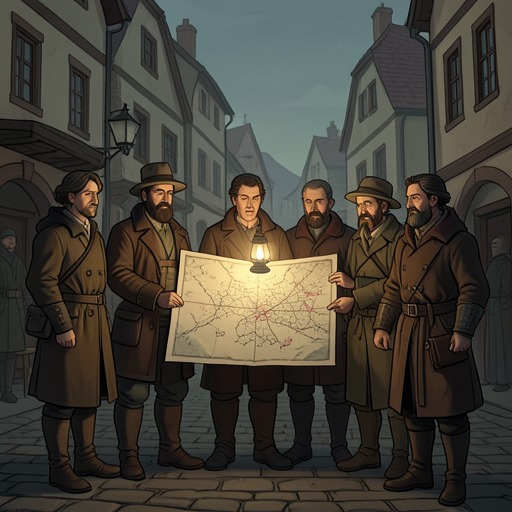
The plan called for simultaneous raids on Old windmill, The Brenner house and the cottage where Dale Brenner lived. Police intended to take both men without giving either them or their families an opportunity to warn one another. The simultaneous approach would take longer to arrange, but Mackenzie and the other officers judged it the best prospect of recovering Jenny alive. The plan depended on every team reaching its target as intended; its carefully controlled timing could not guarantee what they would find once they got there.
The broader investigation had already produced unsettling signs that Sally Palmer’s disappearance had gone largely unnoticed. After the pub barbecue, she failed to collect a grocery order and stopped picking up her daily Guardian, yet no one reported her missing. A witness also recalled that she had been annoyed by a dead stoat left on her doorstep. Mackenzie considered whether it might be a warning or marker, while allowing that it could have been a prank. These details lent weight to the possibility that animals formed part of the killer’s pattern, but did not establish who had placed them or where Jenny was being held.
The Approach and Raid
Mackenzie joined the tactical teams assigned to Old windmill. As dusk settled, police cars and vans carried officers in body armour toward the target. An armed response unit accompanied them, along with paramedics and an ambulance prepared to take Jenny or anyone else to hospital. Because the only way to reach the windmill was by a narrow, overgrown track, the vehicles stopped at the edge of the woods and the officers continued on foot.
At the site, the teams waited among the trees while officers moved to cover the doors and windows at the rear. Mackenzie watched the ruined building as the operation formed around it. Once the radio confirmed that everyone was in position, he looked to the officer in charge of the tactical teams, received a brief nod, and gave the signal to begin. The sequence is presented through David’s later reconstruction of what Mackenzie told him, while David himself was not at the windmill and knew nothing of the raid as it unfolded.
Failure and Immediate Consequences
David was left waiting, unable to take part in the operation. He understood why the police needed to plan carefully, having seen operations go wrong, but that knowledge did not ease the frustration of being unable to act. He was not welcome at the police trailer and could not bear to remain there trying to read the officers’ expressions for news. He returned to his Land Rover and called Ben, who was waiting to hear what had happened.
Elsewhere, Mackenzie stood among cages holding frightened birds and animals as a sergeant reported that the teams had checked everywhere and found no one. The result was stark: the police had reached the target, but neither Jenny nor the people they hoped to seize were there. The animals connected the empty building to the investigation’s recurring suspicions about animal markers, without resolving the identity of whoever had placed them there. The failed raid thus produced an absence where the operation had most urgently expected an answer.
The Search Shifts
The raid’s failure did not end David’s search. As a storm approached, he recognized the familiar sound of flies near a house and investigated it. Inside, black, sticky material marked the edges of a bedroom door; David identified it as bitumen and remembered the same substance associated with a dead woman’s neck. The discovery gave the unsuccessful operation a consequential aftermath: the next lead came not from the windmill but from a different location.
David had been convinced that Carl Brenner was the killer, but the evidence at the house made Tom Mason fit the profile as well. Mason had kept his dead grandfather’s body inside and tried to seal the bedroom, while the bitumen offered a possible connection to the earlier crime. This was a change in David’s working suspicion, not proof that Mason was responsible. In the sequence of the investigation, the raid’s empty rooms and cages mark a reversal: a major police effort fails to recover Jenny, while the clues that begin to redirect David are found elsewhere.